
AI Software development
What is AI Software Development?

Author- SEO Content Writer
AI software development is the process of creating software applications that use artificial intelligence technologies to perform tasks such as analyzing data, recognizing patterns, and making decisions automatically. These systems use technologies like machine learning and natural language processing to assist developers throughout the software development lifecycle, including coding, testing, and deployment.
By combining ai and software development, organizations can build smarter digital products and advanced ai applications that improve efficiency and automate complex processes. As a result, artificial intelligence software development has become an essential approach for businesses looking to innovate through modern ai development strategies.
AI Software Development Trends to Watch in 2026
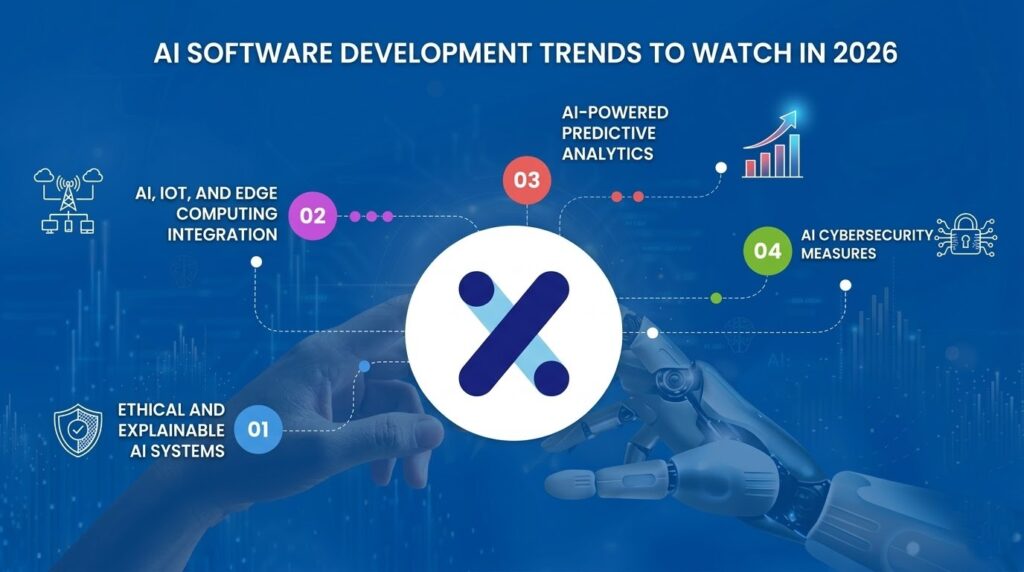
As organizations continue investing in intelligent technologies, several innovations are shaping the future of AI software engineering. These trends are influencing how companies design intelligent platforms and deploy AI-driven solutions.
1.The Emergence of Ethical and Explainable AI Systems
One of the most important trends in artificial intelligence software development is the rise of ethical and explainable AI. Explainable AI focuses on making AI systems transparent so that users can understand how decisions are made. This helps address concerns related to bias, accountability, and trust in automated systems.
In industries such as healthcare and finance, decision-making algorithms must be interpretable and auditable. Developers are increasingly designing AI models that provide clear explanations for predictions and recommendations. This approach improves regulatory compliance and ensures responsible use of artificial intelligence programs.
2. AI, IoT, and Edge Computing Integration
Another major trend is the integration of AI with IoT and edge computing. The combination of AI technologies with connected devices allows systems to analyze sensor data and make decisions in real time without relying entirely on centralized cloud servers.
This integration enables innovative ai applications such as predictive maintenance in manufacturing, smart transportation systems, and intelligent healthcare devices. For developers involved in ai software design, edge AI also improves system performance by reducing latency and enabling faster responses to real-world events.
3. AI-Powered Predictive Analytics
Predictive analytics is becoming a cornerstone of modern AI software development. Machine learning algorithms analyze historical and real-time data to identify patterns and predict future outcomes. Businesses use these systems to forecast customer behavior, optimize supply chains, and detect risks before they occur.
Predictive analytics tools allow organizations to move from reactive decision-making to proactive strategies. For example, financial platforms use AI models to identify fraud patterns, while logistics companies predict equipment failures before they disrupt operations.
4. Greater Focus on AI Cybersecurity Measures
With the rapid growth of digital systems, security has become a priority in ai software engineering. AI technologies are increasingly used to detect anomalies, identify vulnerabilities, and respond to cyber threats in real time.
Machine learning models analyze network traffic and user behavior to identify suspicious patterns that traditional security tools might miss. As cyber risks continue to evolve, organizations are integrating AI-driven cybersecurity into their artificial intelligence software development strategies to protect critical data and systems.
Major AI Software Development Services
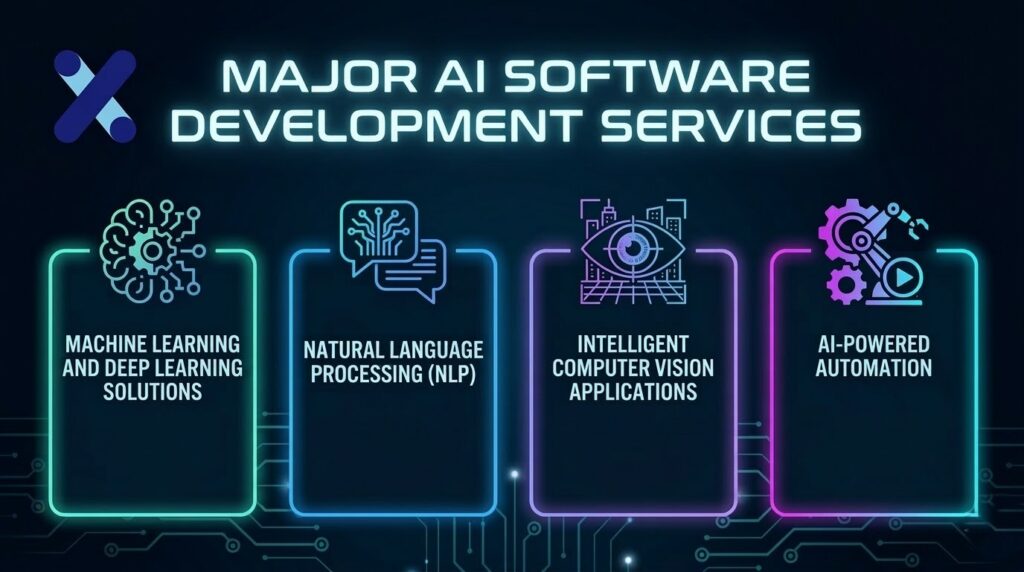
Businesses that invest in AI software development services typically focus on several key technology areas that power intelligent applications.
1. Machine Learning and Deep Learning Solutions
Machine learning and deep learning technologies form the foundation of most ai applications. These models enable systems to analyze large datasets, detect patterns, and continuously improve their predictions. Organizations use these solutions for fraud detection, recommendation systems, and predictive analytics.
Modern ai development teams design algorithms that can adapt to changing data, allowing software systems to become smarter over time.
2. Natural Language Processing (NLP)
Natural language processing allows software systems to understand and interpret human language. NLP technologies power chatbots, virtual assistants, and sentiment analysis tools. Businesses often integrate NLP-based artificial intelligence programs into customer support platforms to automate conversations and deliver personalized responses.
3. Intelligent Computer Vision Applications
Computer vision technology enables machines to interpret visual information from images and videos. This capability supports applications such as facial recognition, medical image analysis, and automated quality inspection in manufacturing. Computer vision has become a critical component of advanced ai software design for industries that rely on visual data processing.
4. AI-Powered Automation
AI-powered automation combines machine learning with intelligent process automation to streamline repetitive business tasks. Intelligent automation technologies help organizations reduce operational costs and improve efficiency by automating data processing, workflow management, and decision-making processes.
This capability makes ai and software development particularly valuable for enterprises seeking scalable digital solutions.
How is AI used in software?
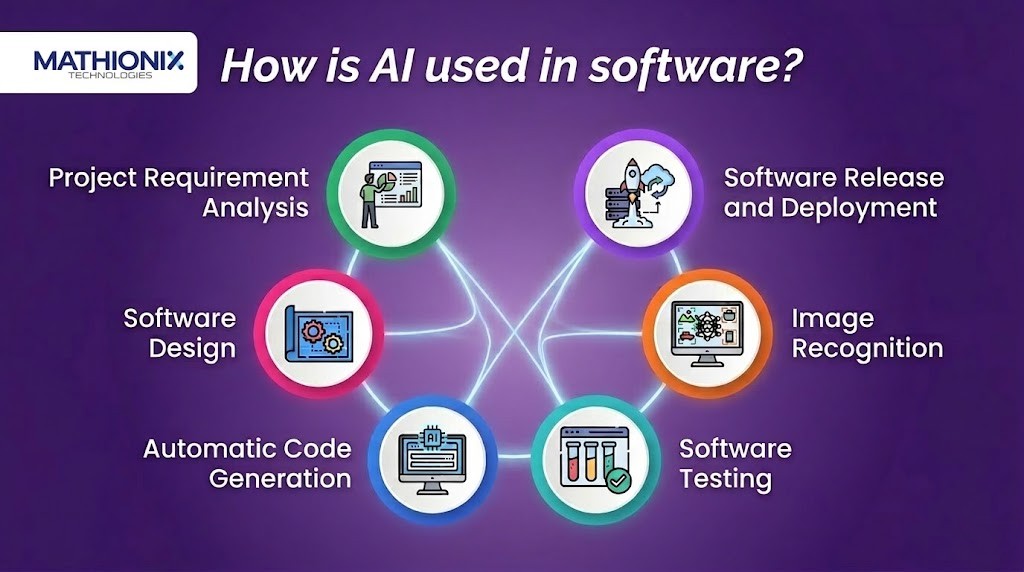
Artificial intelligence is transforming every stage of the software development lifecycle, enabling developers to build smarter applications with improved efficiency.
1. Project Requirement Analysis
AI tools assist development teams by analyzing large datasets and identifying patterns in user requirements. This allows project managers to better understand customer needs and define project goals more accurately.
2. Software Design
During the ai software design phase, developers use AI tools to evaluate architectural decisions, identify potential performance issues, and recommend optimal system structures.
3. Automatic Code Generation
AI-powered development platforms can generate code snippets or even entire modules from natural language instructions. These systems reduce development time and improve coding efficiency by assisting programmers during the coding process.
4. Software Testing
Testing is one of the most time-consuming stages of development. AI-driven testing tools automatically generate test cases, identify bugs, and predict potential system failures, allowing developers to improve software quality more quickly.
5. Image Recognition
Many modern applications rely on image recognition technologies powered by computer vision. These AI systems analyze visual data to identify objects, faces, or patterns, enabling innovations in healthcare, retail, and security.
6. Software Release and Deployment
AI also improves deployment processes by monitoring system performance and predicting potential issues before software is released. Intelligent monitoring systems analyze real-time data to ensure stable and reliable application performance.
Conclusion
AI software development is transforming how businesses build intelligent, scalable, and future-ready solutions across industries. By leveraging advanced AI applications, companies can improve efficiency, decision-making, and customer experiences. As technology continues to evolve, adopting AI-driven software is no longer optional but essential for staying competitive.
Partner with Mathionix to unlock the full potential of AI software development and build innovative solutions tailored to your business needs.
Grow Your Business with Advanced AI Software Development by Mathionix
Related Articles for You


Frequently Asked Questions
What industries can benefit most from AI software development?
Industries such as healthcare, finance, manufacturing, retail, and logistics benefit significantly from AI software development. These sectors use AI technologies to automate operations, analyze large datasets, improve customer experiences, and enhance decision-making.
How do I choose the best AI development company for my business?
Choosing the right partner requires evaluating their expertise in AI software engineering, technology stack, and industry experience. Businesses should also consider whether the company can design scalable ai applications tailored to their operational needs.
Why is AI software development important for businesses in 2026?
In 2026, organizations are relying on AI technologies to remain competitive in digital markets. Artificial intelligence software development enables companies to automate workflows, analyze real-time data, and deliver personalized digital experiences that modern customers expect.
How does Mathionix support businesses in AI software development?
Companies like Mathionix help businesses build scalable intelligent solutions through advanced ai development services. By combining expertise in ai software design, machine learning, and intelligent automation, development teams can create customized artificial intelligence programs that drive innovation and digital growth.