
AI Software Development Trends & Services Guide
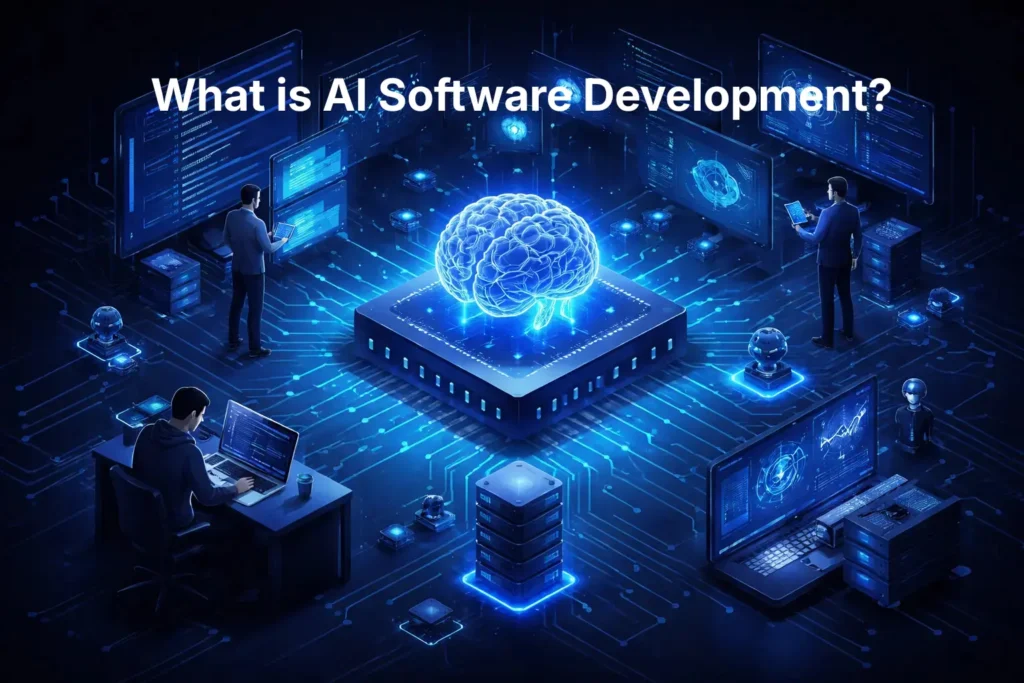
AI Software development What is AI Software Development? AI software development is the process of creating software applications that use artificial intelligence technologies to perform tasks such as analyzing data, recognizing patterns, and making decisions automatically. These systems use technologies like machine learning and natural language processing to assist developers throughout the software development lifecycle, including coding, testing, and deployment. By combining ai and software development, organizations can build smarter digital products and advanced ai applications that improve efficiency and automate complex processes. As a result, artificial intelligence software development has become an essential approach for businesses looking to innovate through modern ai development strategies. AI Software Development Trends to Watch in 2026 As organizations continue investing in intelligent technologies, several innovations are shaping the future of AI software engineering. These trends are influencing how companies design intelligent platforms and deploy AI-driven solutions. 1.The Emergence of Ethical and Explainable AI Systems One of the most important trends in artificial intelligence software development is the rise of ethical and explainable AI. Explainable AI focuses on making AI systems transparent so that users can understand how decisions are made. This helps address concerns related to bias, accountability, and trust in automated systems. In industries such as healthcare and finance, decision-making algorithms must be interpretable and auditable. Developers are increasingly designing AI models that provide clear explanations for predictions and recommendations. This approach improves regulatory compliance and ensures responsible use of artificial intelligence programs. 2. AI, IoT, and Edge Computing Integration Another major trend is the integration of AI with IoT and edge computing. The combination of AI technologies with connected devices allows systems to analyze sensor data and make decisions in real time without relying entirely on centralized cloud servers. This integration enables innovative ai applications such as predictive maintenance in manufacturing, smart transportation systems, and intelligent healthcare devices. For developers involved in ai software design, edge AI also improves system performance by reducing latency and enabling faster responses to real-world events. 3. AI-Powered Predictive Analytics Predictive analytics is becoming a cornerstone of modern AI software development. Machine learning algorithms analyze historical and real-time data to identify patterns and predict future outcomes. Businesses use these systems to forecast customer behavior, optimize supply chains, and detect risks before they occur. Predictive analytics tools allow organizations to move from reactive decision-making to proactive strategies. For example, financial platforms use AI models to identify fraud patterns, while logistics companies predict equipment failures before they disrupt operations. 4. Greater Focus on AI Cybersecurity Measures With the rapid growth of digital systems, security has become a priority in ai software engineering. AI technologies are increasingly used to detect anomalies, identify vulnerabilities, and respond to cyber threats in real time. Machine learning models analyze network traffic and user behavior to identify suspicious patterns that traditional security tools might miss. As cyber risks continue to evolve, organizations are integrating AI-driven cybersecurity into their artificial intelligence software development strategies to protect critical data and systems. Major AI Software Development Services Businesses that invest in AI software development services typically focus on several key technology areas that power intelligent applications. 1. Machine Learning and Deep Learning Solutions Machine learning and deep learning technologies form the foundation of most ai applications. These models enable systems to analyze large datasets, detect patterns, and continuously improve their predictions. Organizations use these solutions for fraud detection, recommendation systems, and predictive analytics. Modern ai development teams design algorithms that can adapt to changing data, allowing software systems to become smarter over time. 2. Natural Language Processing (NLP) Natural language processing allows software systems to understand and interpret human language. NLP technologies power chatbots, virtual assistants, and sentiment analysis tools. Businesses often integrate NLP-based artificial intelligence programs into customer support platforms to automate conversations and deliver personalized responses. 3. Intelligent Computer Vision Applications Computer vision technology enables machines to interpret visual information from images and videos. This capability supports applications such as facial recognition, medical image analysis, and automated quality inspection in manufacturing. Computer vision has become a critical component of advanced ai software design for industries that rely on visual data processing. 4. AI-Powered Automation AI-powered automation combines machine learning with intelligent process automation to streamline repetitive business tasks. Intelligent automation technologies help organizations reduce operational costs and improve efficiency by automating data processing, workflow management, and decision-making processes. This capability makes ai and software development particularly valuable for enterprises seeking scalable digital solutions. How is AI used in software? Artificial intelligence is transforming every stage of the software development lifecycle, enabling developers to build smarter applications with improved efficiency. 1. Project Requirement Analysis AI tools assist development teams by analyzing large datasets and identifying patterns in user requirements. This allows project managers to better understand customer needs and define project goals more accurately. 2. Software Design During the ai software design phase, developers use AI tools to evaluate architectural decisions, identify potential performance issues, and recommend optimal system structures. 3. Automatic Code Generation AI-powered development platforms can generate code snippets or even entire modules from natural language instructions. These systems reduce development time and improve coding efficiency by assisting programmers during the coding process. 4. Software Testing Testing is one of the most time-consuming stages of development. AI-driven testing tools automatically generate test cases, identify bugs, and predict potential system failures, allowing developers to improve software quality more quickly. 5. Image Recognition Many modern applications rely on image recognition technologies powered by computer vision. These AI systems analyze visual data to identify objects, faces, or patterns, enabling innovations in healthcare, retail, and security. 6. Software Release and Deployment AI also improves deployment processes by monitoring system performance and predicting potential issues before software is released. Intelligent monitoring systems analyze real-time data to ensure stable and reliable application performance. Grow Your Business with Advanced AI Software Development by Mathionix Explore Our AI Solutions Frequently Asked Questions What industries can benefit most from AI software development? Industries such as healthcare, finance, manufacturing, retail, and logistics benefit
Artificial Intelligence Security
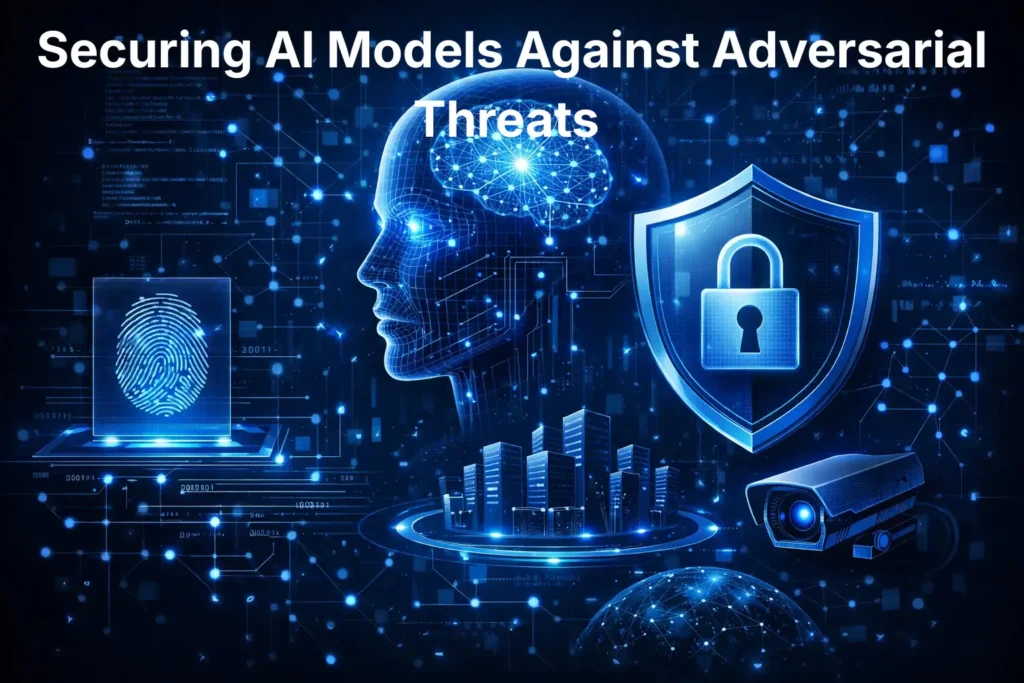
AI Security Securing AI Models Against Adversarial Threats AI security protects artificial intelligence systems, data, and machine learning models from attacks, manipulation, or unauthorized access. It ensures AI systems remain reliable and secure as organizations increasingly adopt AI technologies. Artificial intelligence security focuses on safeguarding training data, algorithms, and AI pipelines from threats such as data poisoning, model attacks, or data theft. Modern AI cyber security strategies also use AI tools to strengthen machine learning security and detect cyber threats more effectively Serious Threats to AI Security As AI adoption increases, the attack surface also expands. Threat actors are developing new techniques to exploit vulnerabilities in AI systems, which makes artificial intelligence security a critical component of modern cyber security solutions. 1. Supply Chain Vulnerabilities AI systems rely on large ecosystems of data sources, third-party libraries, APIs, and open-source models. If any component in this chain is compromised, the entire system may be exposed to risk. Attackers can manipulate datasets, inject malicious code into AI models, or compromise development pipelines to influence AI behavior. Such supply-chain weaknesses create opportunities for attackers to embed vulnerabilities before a system is even deployed. 2. Data Poisoning Data poisoning is one of the most widely discussed threats in AI security. It occurs when malicious actors intentionally manipulate the training data used by machine learning models. By injecting corrupted or misleading information into datasets, attackers can alter the model’s behavior and cause incorrect predictions or biased outcomes. Because AI systems rely heavily on large volumes of data, poisoned datasets can degrade accuracy and undermine trust in the system’s results. 3. Privacy Concerns AI systems frequently process sensitive personal or organizational data. If security measures are weak, attackers may gain access to confidential information used during training or inference. Data exposure risks increase when AI models operate through public APIs or cloud platforms. In AI cyber security frameworks, protecting data confidentiality is therefore a major priority. 4. AI Misconfiguration Misconfigured AI environments can create security gaps. Improper access controls, exposed APIs, or insecure data pipelines may allow unauthorized users to interact with machine learning models. These configuration issues often arise when organizations deploy AI systems rapidly without implementing adequate governance and monitoring practices. 5. Model Inversion Attacks Model inversion attacks are advanced techniques that attempt to extract sensitive information from an AI model by analyzing its outputs. By querying the model repeatedly and analyzing the responses, attackers may reconstruct data used during training or reveal confidential information.These attacks demonstrate why protecting model access and monitoring inference behavior is critical for artificial intelligence security. Benefits of AI-Powered Security Technologies Despite the risks, AI technologies also provide powerful capabilities that improve cyber security defenses. Organizations are increasingly integrating machine learning security tools into their security operations. 1. Enhanced Threat Detection AI systems can analyze massive volumes of network data and identify suspicious patterns that traditional tools may miss. Machine learning algorithms continuously learn from new threats, enabling them to detect anomalies and emerging attack patterns in real time. 2. Rapid Incident Remediation AI-driven security platforms can automate responses to detected threats. When suspicious activity is identified, automated workflows can isolate affected systems, block malicious traffic, or trigger alerts for security teams. This rapid response helps reduce the impact of cyber incidents. 3. Improved Security Visibility Artificial intelligence security platforms provide deeper visibility into complex IT environments. AI tools can monitor user activity, network behavior, and system configurations to identify potential vulnerabilities before they are exploited. 4. Greater Efficiency AI cyber security solutions reduce the workload on human security analysts by automating repetitive monitoring tasks. Security teams can focus on strategic decision-making while AI systems handle large-scale threat detection and data analysis. 5. Continuous Learning One of the most important advantages of AI in cyber security is its ability to learn continuously. Machine learning models improve their detection capabilities as they analyze new threat data, allowing security systems to adapt to evolving attack techniques. Emerging Trends in AI Security The rapid growth of AI adoption is shaping new security trends that will define the future of digital protection. 1. AI-Powered Attack vs AI-Powered Defense Attackers are increasingly using artificial intelligence to automate cyberattacks, generate phishing campaigns, and identify vulnerabilities at scale. At the same time, organizations are deploying AI-powered defense systems capable of detecting threats faster than traditional security tools. This evolving landscape has created an ongoing competition between offensive and defensive AI technologies. 2. Supply Chain Protection As AI systems rely heavily on third-party models, data sources, and software libraries, protecting the AI supply chain is becoming a major focus. Organizations are investing in verification tools, secure development pipelines, and model validation techniques to ensure that AI components are trustworthy before deployment. 3. Quantum-Proof AI Systems Another emerging security trend involves preparing AI systems for the future impact of quantum computing. Quantum technologies may eventually break traditional encryption methods, which could expose sensitive AI datasets and algorithms. Researchers are exploring quantum-resistant cryptography to protect AI systems from future computational threats. Protect Your AI Infrastructure with Advanced AI Security Solutions by Mathionix Explore Our AI Solutions Frequently Asked Questions What are the key differences between AI security and traditional cybersecurity? Traditional cybersecurity focuses on protecting networks, software, and digital infrastructure from attacks. AI security, on the other hand, specifically protects machine learning models, training data, and AI algorithms from manipulation, misuse, or theft. What role does machine learning play in security systems? Machine learning helps security platforms analyze large datasets, detect anomalies, and identify patterns associated with cyber threats. These capabilities allow organizations to detect attacks faster and automate many aspects of threat response. What is model poisoning in AI security? Model poisoning occurs when attackers manipulate an AI model or its training process to influence its behavior. This manipulation may cause the system to produce incorrect outputs or introduce hidden vulnerabilities that can later be exploited. How can AI be used in security? AI can strengthen cyber defense by automating threat detection, analyzing network activity, identifying vulnerabilities,
Data Science Services: Turning Everyday Data into Smart Business Decisions
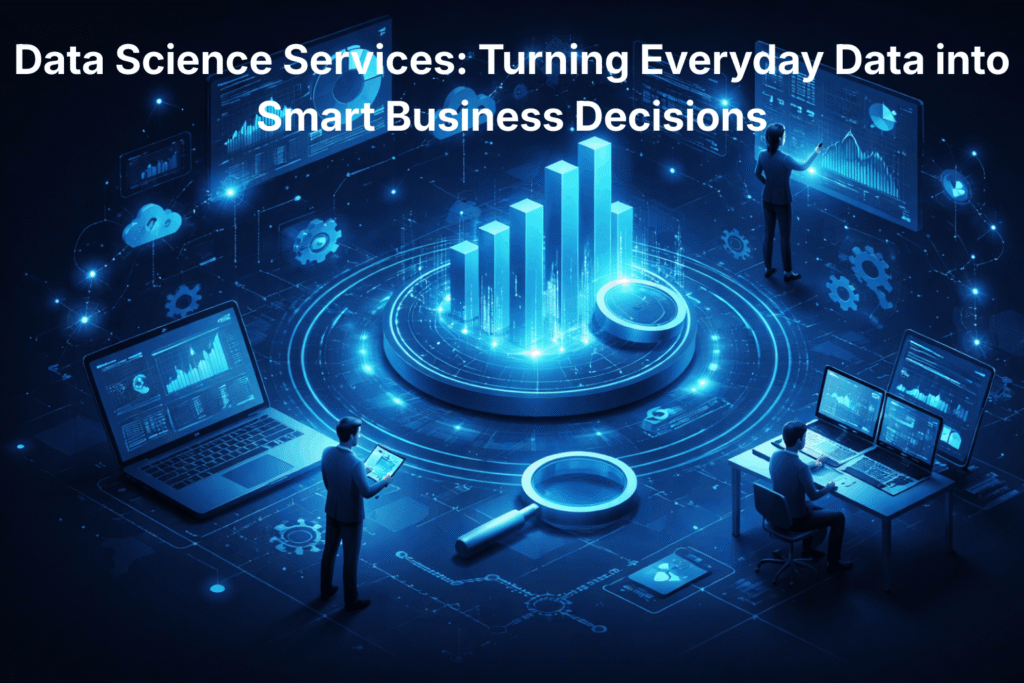
In today’s digital-first world, businesses generate huge amounts of data every single day. From website visits and app usage to sales records and customer feedback, data is everywhere. But raw data alone doesn’t create value. This is where data science comes in. At Mathionix Technologies, we provide data science services that help businesses make sense of their data and use it to take better, faster, and more confident decisions. What Are Data Science Services? Data science services involve collecting, cleaning, analyzing, and interpreting data to discover patterns, trends, and useful insights. It combines statistics, programming, and domain knowledge to answer real business questions like: Why are sales dropping in a specific region? Which customers are most likely to convert? What factors affect customer retention? How can operations be improved using past data? Instead of guessing, data science allows businesses to rely on facts and evidence. Why Data Science Services Matter for Businesses Many businesses sit on valuable data without using it properly. Data science helps turn this unused information into clear insights that support growth. 1. Better Decision-Making Data-driven decisions reduce risk. When leaders can see trends and patterns clearly, they can plan strategies with more confidence. 2. Understanding Customers Data science helps analyze customer behavior, preferences, and buying patterns. This makes it easier to improve user experience and build long-term relationships. 3. Improved Efficiency By analyzing operational data, businesses can identify bottlenecks, reduce waste, and improve workflows. 4. Forecasting and Planning Using historical data, businesses can predict future demand, sales trends, and performance outcomes more accurately. How Mathionix Delivers Data Science Services At Mathionix Technologies, we focus on practical data science that solves real problems. Our approach is simple and transparent. Data Collection and Preparation We start by understanding your data sources. This may include databases, CRM systems, websites, mobile apps, or third-party tools. We clean and organize the data so it’s ready for analysis. Data Analysis and Insights Our team studies the data to identify trends, patterns, and hidden opportunities. The goal is not just analysis, but clear insights that make sense to non-technical teams as well. Machine Learning and Predictive Models When needed, we use machine learning models to predict outcomes such as customer churn, sales performance, or demand patterns. Clear Reporting and Dashboards Insights are presented through easy-to-understand reports and dashboards. This helps teams track performance and take action quickly. Industries That Benefit from Data Science Data science is useful across many industries, including: E-commerce and retail Finance and fintech Healthcare and wellness Education and edtech Real estate Marketing and advertising SaaS and technology startups No matter the industry, data science helps uncover insights that drive smarter decisions. Real-World Use Cases Identifying high-value customers and improving targeting Reducing churn by analyzing user behavior Optimizing marketing campaigns based on performance data Forecasting sales and inventory needs Improving product features using usage data Getting Started with Data Science Services Final Thoughts Data science is no longer optional. It has become an essential part of modern business strategy. Organizations that use data effectively gain a clear advantage over those that rely on assumptions. If you’re looking to understand your data better and use it to grow your business, Mathionix Technologies is here to help. Contact Mathionix Technologies today to explore how our data science services can support your business goals.