

Mobile App Security
Mobile Application Security: Preserving User Information and Privacy

Author- SEO Content Writer
In today’s fast changing digital landscape, mobile apps are an essential part of our daily lives. From communication and entertainment to shopping and banking, smartphone apps make our daily lives easier and more efficient. Regardless of which mobile app you use, greater dependency creates issues about data security and user privacy. With sensitive information stored and exchanged through these applications, mobile app security is critical.
Mobile app security entails taking steps to safeguard user data and privacy from potential risks and cyberattacks. In this blog article, we’ll look at the importance of mobile app security, common security concerns, and recommended practices for protecting user data and privacy.
The Significance of Mobile App Security
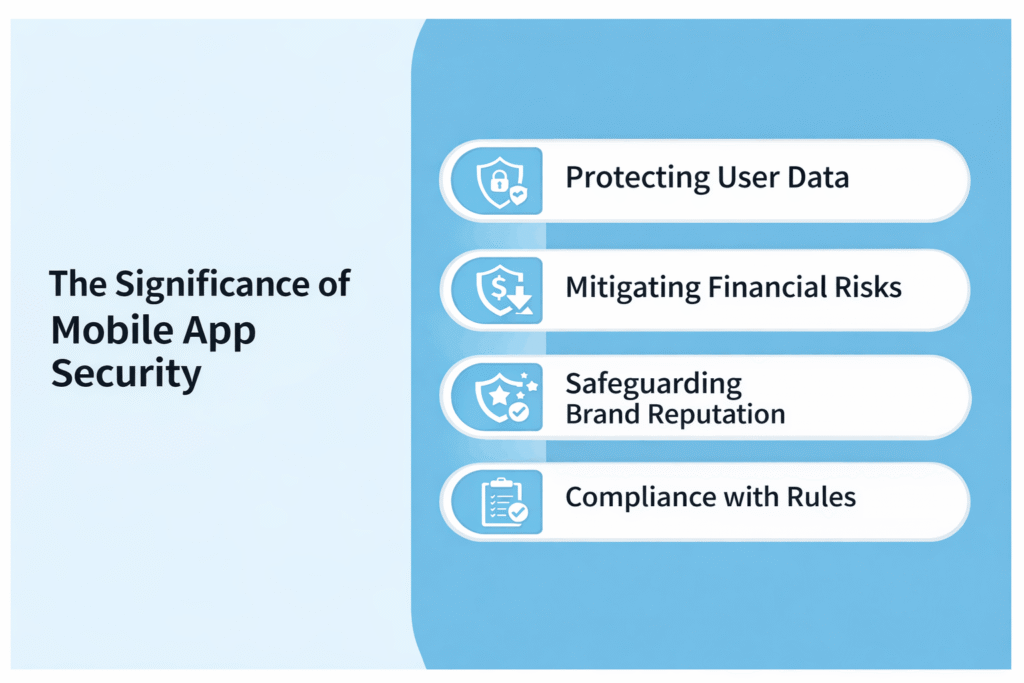
Protecting User Data
Mobile apps frequently handle sensitive user data, such as personal information, financial details, login passwords, and location data, or utilise it to perform data analysis to transform organisations. Protecting sensitive data from unauthorised access and breaches is critical for retaining user confidence and complying with data protection requirements.
Mitigating Financial Risks
Security breaches can result in financial losses like as legal action, fines, compensation for affected users, and reputational harm. Investing in strong security measures can help to mitigate such dangers while also protecting app providers’ businesses.
Safeguarding Brand Reputation
A single security breach can ruin the brand’s reputation and destroy customer trust in the app and the organization that created it. A significant focus on mobile app security can improve the brand’s reputation and build long-term consumer loyalty.
Compliance with rules
Many nations have severe data protection and privacy rules that require businesses to employ suitable security measures to secure user information. Complying with these regulations is both a legal obligation and an ethical responsibility.
Now that we’ve covered the top reasons for prioritising mobile app security, we’ll look at the common dangers that, if left untreated, might jeopardise the integrity and safety of your mobile app.
Common Security Threats for Mobile Apps
Data Breaches
Data breaches happen when unauthorised people or hackers gain access to sensitive user information, such as usernames, passwords, financial information, or personal information. Such instances might have serious ramifications for both the consumers and the app provider.
Man-in-the-Middle Attacks
Man-in-the-middle attacks include hackers intercepting communication between a user’s device and the app’s server. They can eavesdrop on sensitive material being transmitted, change it, or even insert malicious code into the communication stream.
Malware and Phishing Attacks
Malware and phishing assaults are common dangers to the mobile app ecosystem. Users may unintentionally download dangerous apps or fall prey to phishing scams, which compromise their personal information.
Unsecured Application Programming Interfaces
APIs are frequently used by mobile apps to communicate with servers and other services. If APIs are not adequately secured, attackers can use vulnerabilities to obtain access to sensitive data or disrupt app operation.
5 Steps To Boost Mobile App Security
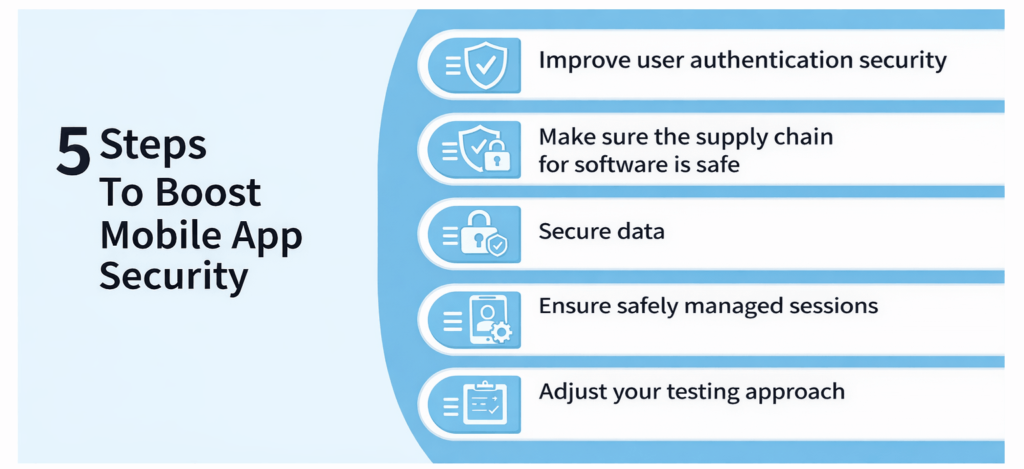
Improve user authentication security
Stronger mobile app access controls must include extra methods for validating users’ identities. Look for an authentication server solution that offers many methods of establishing two-factor authentication (2FA) and password protection. Your authentication techniques could be based on:
How sensitive is the application’s data?
The degree to which a breach can harm your company’s reputation.
Make sure the supply chain for software is safe
Third-party components are part of the software supply chain for mobile applications. Developers must exercise caution while selecting libraries and frameworks for mobile applications. You want open-source projects that are reputable and well-maintained.
Secure data
Ensuring that data cannot be accessed by anyone who intercepts it is part of data security. Encryption should be a fundamental part of any mobile app security system since it changes data into an unintelligible format that threat actors cannot use.
Ensure safely managed sessions
Security in apps that save sensitive data, such online banking apps, can be gravely jeopardised by inefficient session management. Session timeouts should therefore be set to one hour for low-security apps and fifteen minutes for high-risk ones. Additionally, employ industry-standard technology to ensure that sessions end when a different user signs in, for example, and to provide security tokens.
Adjust your testing approach
Making the transition from periodic to continuous testing is one way to change your testing approach. This implies that rather than testing at predetermined times, developers will test continuously. To do this, continuously check your app for vulnerabilities that could expose users to a cyberattack using automated testing and threat modelling.
At Mathionix, we implement these advanced mobile app security practices to help businesses build secure, scalable, and privacy-focused applications. Explore our Mobile App Development Services to learn how we can protect your app from evolving cyber threats.
Related Articles for You



Frequently Asked Questions
What Is Mobile App Security?
The process of safeguarding a mobile application and its user data from viruses, illegal access, cyberthreats, and data breaches is known as mobile app security. To protect user privacy and avoid security flaws, it entails safeguarding the application’s code, data storage, network communications, and authentication procedures.
Why is mobile app security important?
Security for mobile apps is crucial since it can prevent: A) Theft of login credentials; B) Financial data theft; C) Intellectual property theft; and D) Damage to one’s reputation.
How does mobile app security work?
Actively identifying, stopping, and reporting attacks is how mobile app security operates. If required, it can also fully terminate the application, preventing the attacker from exploiting any vulnerabilities that may exist while the app is operating, protecting data and transactions from even the most potent attacks.
How do mobile apps get hacked?
Hackers take use of flaws in mobile apps’ code, APIs, or network connections to compromise them. Reverse engineering, malware insertion, weak passwords, unsecured APIs, and intercepting unencrypted data over public Wi-Fi are examples of common techniques. Applications that lack adequate encryption and frequent security testing are more susceptible to intrusions.